浮出水面
Colombian writer’s new work brings home country closer to Chinese audience_我的网站

A | “两个月前,我们公司收到了一封字体公司的侵权提示函。函件里说,我们对外发布的一个视频使用了他们的一款字体。”苏小兰是一家装备制造业小微企业的总经理助理,她向证券时报记者坦言,收到侵权函后非常困惑——“用的是主流的正版剪辑软件,选的也是软件预装字体,怎么就侵权了?” 这家企业的遭遇并非孤例。记者采访发现,许多企业,尤其是中小微企业,都收到过类似的字体维权函件。
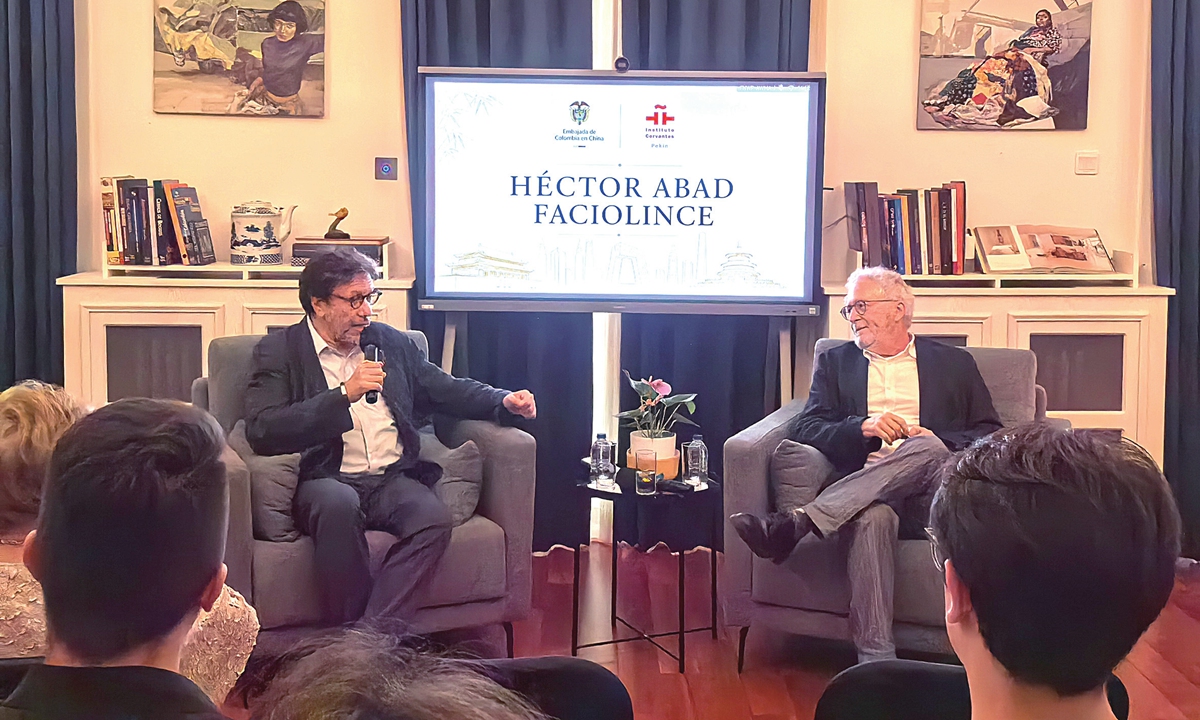
Santiago Gamboa, writer and minister counselor of the Embassy of Colombia in China, (left) and Héctor Abad Faciolince, a Colombian novelist, writer and journalist at a sharing session at the Embassy of the Republic of Colombia in China on August 18, 2026. Photo: Dong Feng/GT
The Embassy of the Republic of Colombia in China hosted a colloquium with Héctor Abad Faciolince, a Colombian novelist, writer and journalist. The writer shared on Tuesday his growth journey from a journalist to achieve his dream as a writer, his observation of the Colombian society and his impression about the changes in China.
In a fully packed hall, Minister Plenipotentiary Jose Fernando Bermúdez Cendales said in his opening remarks that the event is part of an initiative to bring Colombian culture closer to the Chinese public while simultaneously creating new spaces for dialogue and exchange between the two countries.
Bermúdez said that Abad's visit to China offers a particularly valuable opportunity to showcase the richness of our literature and to strengthen the cultural and human bridges connecting Colombia and China.
The session, chaired by Santiago Gamboa, writer and minister counselor of the Colombian Embassy, focused on the career and body of work of Abad and in particular,
El olvido que seremos (Oblivion: A Memoir).
Abad's book is a seminal work of contemporary Colombian literature in which personal and family memory engage deeply with Colombia's recent history. Its translation into Chinese allows this story to reach new readers and represents an extraordinary opportunity to bring both societies closer together through literature, per some commentators.
"We hope this gathering will be an open conversation among cultures, readers, and experiences, and a new expression of the friendship that Colombia and China continue to build," said Bermúdez.
Abad, one of the most important voices in contemporary Latin American literature, shared with the Global Times that this is his second trip in China. The last time he visited the country was two decades ago.
This time, in his eyes, China has changed a lot. In many ways, the country stands for the future of the world.
Abad said he is surprised to see how much Chinese people are depending on the electric devices and network to communicate in a virtual world, and said that he felt "like an alien."
Talking about his interaction with readers in Shanghai, Abad smiled, saying that the readers selected some phrases from his book and asked him to write down as part of the autography and signature for them.
In his book,
El Olvido Que Seremos (The Oblivion We Will Be), which is acclaimed as a "love letter from a son to his father," is not only a deeply affectionate look back at familial bonds but also a courageous attempt to defy oblivion.
Rooted in true events,
The Oblivion We Will Be chronicles the life of his own father. Abad noted that his father was killed in August 1987 - nearly forty years ago.
In the Western literary tradition, a father is often portrayed as a distant or even negative figure. His father, however, was "totally different - a man of love and deep sense of responsibility in both the public sphere and his family life."
Such image of a benevolent, non-authoritarian father has impressed his Chinese readers as well, he said.
As a physician, Abad's father dedicated his life to addressing fundamental issues affecting people's well-being, such as drinking water quality and public health, steadfast in the belief that the world could be made better through action.
Abad's work addresses themes such as memory, violence, inequality, and the human condition, deeply marked by the murder of his father, an event that inspired his most iconic book, The Oblivion We Will Be was published in Chinese by Writer's Publishing House in Beijing in July.
。有律师在检索裁判文书网及法律数据库后发现,字体权利人近年来在全国范围内发起规模化的批量维权,单笔索赔金额普遍在两万元以下,侵权情节多属无心之失,却给企业日常经营带来困扰,也占用大量司法资源。 这不禁让人深思:字体侵权现象缘何如此频发?这是源于企业版权合规意识薄弱,还是存在客观的法律漏洞或“商业陷阱”?批量化、成体系的字体维权,是对知识产权的保护,还是已异化为一种牟利工具? 字体“批量维权”套路化 “我们刚开始收到侵权提示函时还挺紧张的,但后来咨询律师说这多半是钓鱼式维权,都是批量发的。”苏小兰说。 事实上,字体维权已脱离了传统的个案纠纷范畴,形成了一种高度“套路化”的路径。

B | 上海市锦天城律师事务所高级合伙人姜传舜告诉证券时报记者,字体权利方往往一次告上百家企业,每家主张赔偿两三万元,原告的证据链高度模板化——起诉状、证据目录、网页公证、权属证书,标准一致,程序简单。不过,字体公司很多时候未必会走到诉讼这一步,许多案件最终会走向调解,实际和解金额往往只有几千元。“字体维权没有什么技术含量,而且不挑企业,规模很小的公司也会收到提示函。”在他看来,字体维权就如同“苍蝇”,什么企业都会去“叮”一下。

C | 放眼整个行业,批量维权是字体行业的普遍现象。记者查询天眼查发现,山东潍坊一家字体字库公司,截至今年8月23日,司法案件高达1307件,91.74%的身份为原告;2022年至2025年依次为18件、89件、423件、465件,2026年以来也已达到312件,呈逐年递增趋势。另外两家位于北京和杭州的头部字体字库公司,司法案件总数也已分别达到2069件和2722件。 曾任一家汽车行业新三板公司董事会秘书的顾成龙,也曾收到过字体侵权提示函。他告诉记者,这类维权方往往手握海量字体著作权资源,通过爬虫技术、公证购买等方式锁定中小企业侵权线索,批量发送措辞强硬的函件,要求以小额和解费了事,企业若拒绝,再以公证证据为基础批量起诉。“为什么爱给小企业发?因为这些企业规模不大,没遇过这种事,很容易被唬住。”顾成龙说,这类广撒网策略的核心目的并非诉讼,而是以提示函为“钩子”,最终实现推广正版、宣传促销、获取赔偿的目的。

D | 双重授权下的“陷阱” 要理解字体侵权为何如此高发,首先得弄明白苏小兰的困惑:为什么购买的是正版软件,用的也是软件自带的字体,却依然会陷入侵权纠纷? 根源在于一种名为“双重授权”的机制。

E | 江苏摩方常闻律师事务所律师曾博处理过多起字体版权案件。他告诉记者,用户购买正版操作系统或办公软件后,获得的只是软件本身的使用权。以微软办公软件为例,软件商与字体商之间存在商业合作,会在软件中预装字库。微软在服务协议中对字体使用做了明确限制,授权仅限于“显示和打印”,未延伸到商业发布。这意味着,一旦用户在公司网页、宣传海报等商业物料中使用了相关字体,就可能面临侵权风险。 “以大家熟悉的‘微软雅黑’为例,用户很容易误以为这是微软的字体,但实际上,它是微软委托方正公司设计的,著作权归属方正,微软只取得了预装和使用的授权,并无权代替方正向用户转授商业发布权。”曾博说,华文、蒙纳等字体商的情况也类似,只是将字库授权给软件商内置到系统中,用户若将输出成果用于商业目的,还需单独付费授权。 如此一来,字体商实际上创设了一个“双重授权”的结构。第一重是授予软件商的预装授权,第二重是要求终端用户取得的商业发布授权。曾博认为,这个问题的根源,在于软件商和字体商都没有在软件界面对预装字体的权利状况和商用限制作出明显提示。

F | 相关限制藏在冗长的许可协议里,用户很难注意到,客观上构成了一种“陷阱”。

G | “如果用户每选一种字体,界面就弹出授权提示,一方面影响操作体验,另一方面会导致字体的使用率下滑。”顾成龙道破了双方的“默契”——软件商要集成优质字体提升产品竞争力,字体商要在预装扩大用户基数后再通过维权变现,这是对双方都有利的事,夹在中间的用户却很容易在不知情的情况下面临被索赔的风险。

H | 值得注意的是,企业自身也确有短板。设计师自行下载字体、宣传物料外包设计、员工“哪个字体好看用哪个”,是中小企业的常态。

I | 很多企业在收到侵权提示函后,才开始建立合规意识。“后来,我们要求员工只能用某几种免费字体,尽量避免侵权。”苏小兰说。 补齐两大漏洞 “字体本身确实是有版权的,应当得到尊重和保护。”姜传舜表示。字体、字库受著作权保护已在司法层面被反复确认,只要以真实登记、真实创作的著作权为基础,维权行为就具有合法性,不能等同于“恶意碰瓷”。 但不可否认,字体公司“批量维权”虽然合法,但合理性则有讨论空间。曾博认为,软件厂商把第三方字体预装进产品,商用限制却埋在冗长的协议里,界面上不做提示,“天然在给用户设陷阱,不应该被鼓励”。有业内人士则指出,批量维权容易异化为盈利模式,模糊“维权”与“牟利”的界限,滑向以维权之名行营销乃至“敲诈”之实。 在业内人士看来,要减少字体侵权现象,需要补齐两大漏洞。 首先,从企业层面,要补上信息不对称的漏洞,推动软件商和字体商明确提示字体的使用权限、授权范围。“软件厂商在使用界面,应当给用户提供免费和付费字体的选择,明确提示哪些字体商用需要二次授权。

J | ”顾成龙说。

K | 但要打破长期以来的“利益格局”并非易事,除了呼吁厂商主动跟进,还需要行业自律或行政指导的外部“推力”。 其次,从法律层面,要补上预装字体的权利边界漏洞。

L | 曾博建议,应推动立法或司法解释把预装字体的权利边界说清楚。“至少应该明确,在软件商和字体商都没有在软件界面做出合理授权提示的情况下,用户基于合理信赖使用预装字库输出成果的行为,不应当被认定为侵权,或者即便被认定为侵权,也只承担停止使用的责任,而无需赔偿。”曾博说。此外,针对批量维权的赔偿标准,姜传舜认为法律层面可推动形成更清晰的标准,压缩漫天要价的空间。 而对于企业自身来说,一方面,要增强合规意识,建立字体白名单、优先使用免费商用字体、统一对外物料字体规范、在委托设计合同中加入知识产权担保条款;另一方面,收到侵权函件后应核实权属真伪、自查使用场景,先弄清自己是否真的侵权,再决定整改、谈判还是应诉,必要时寻求专业法律意见。

M | (应受访者要求,苏小兰为化名) (文章来源:证券时报)。
Current article:http://h48plzi.bianneixuanbingqinyouxie.buzz/news/20260826_5586163.html
Published on:07:44:05