


电影天堂
“제4인뱅, 개인사업자 여신 비중 50% 이상 의무화해야”_我的网站

一 | 제4인터넷은행의 역할 2차 토론회인뱅3사 개인사업자 대출 8% 그쳐자본금보다 CSS 기술력 심사해야제4인터넷전문은행 인가 조건에 개인사업자 여신 비중을 50% 이상으로 못 박아야 한다는 제안이 나왔다. 자본금 규모 대신 대안신용평가(CSS) 기술력을 심사의 중심에 놓자는 요구도 함께 제기됐다.▶ “개인사업자 여신 50% 이상, 인가 조건으로 명시해야”=26일 금융권에 따르면 25일 국회에서 열린 ‘소상공인 금융혁신과 제4인터넷전문은행의 역할’ 정책토론회에서 이종인 미국 캐롤라인대 경영학과 교수는 신규 인가 심사 가이드라인에 ‘개인사업자 및 소상공인 대출 최소 비율’을 총여신의 50% 이상으로 설정하고, 이를 인가 승인의 명시적 부대조건으로 규정하자고 제안했다. 출범 이후 수익성을 이유로 주택담보대출·고신용 가계대출 중심 영업으로 회귀하는 구조를 사전에 차단하기 위해 가계대출 비중 상한선을 함께 두자는 안도 냈다.이 교수는 “소상공인 금융의 핵심은 자본의 절대 규모보다 차주의 사업성을 판별하는 기술력”이라며 CSS의 정교성과 비금융 데이터 결합 역량을 핵심 평가요소로 반영하라고 요구했다. 이커머스·전자지급결제대행(PG)·배달 플랫폼·공공 데이터의 가명결합 절차 간소화도 함께 제안했다.지난해 인가 불허의 직접적 사유였던 자본력 문제를 겨눈 제안도 나왔다. 인호 고려대 블록체인연구소장은 ▷600만 소상공인과 국민이 직접 주주가 되는 국민주 방식 공모 ▷소상공인 토큰증권(STO) 발행을 통한 소액·광범위 자본 조달 ▷디지털자산 업계의 은행 자본 참여 허용 등을 제시했다. 인 교수는 “자본 요건을 낮추자는 것이 아니라 자본을 모을 수 있는 방법을 넓히자는 것”이라며 최소자본금 기준의 구체화와 단계적 인가·조건부 이행관리를 함께 강조했다.▶“기존 인뱅 여신 93%가 가계대출…구조적 미스매치”=이런 요구의 배경에는 기존 인터넷전문은행 3사의 여신 편중이 자리한다는 지적도 나왔다.이 교수는 “지난해 말 기준 인뱅3사(카카오뱅크·케이뱅크·토스뱅크) 합산 가계대출 잔액이 약 74조9000억원인데 개인사업자대출 잔액은 약 6조8000억원으로 비중이 약 8%에 그친다”며 “전체 인터넷은행 여신의 90% 이상이 주담대를 비롯한 가계대출에 편중돼 있는 구조적 한계를 벗어나지 못했다”고 지적했다.인 소장도 “인터넷은행은 중·저신용자 대출 비중 30%라는 포용금융 지표는 달성했지만 그 포용이 개인사업자 영역까지 닿지는 못했다”며 “담보·보증 중심 심사 체계이기 때문에 소호 특화 신용평가는 초기 단계에 머물러 있다”고 꼬집었다.소상공인 CSS는 이미 검증 단계에 접어들었다고 설명한 권오형 윙크스톤파트너스 대표는 “윙크스톤파트너스는 개인사업자 신용조회 100만명 이상의 데이터를 확보했으며 대출 손실률은 2% 수준”이라며 “비대면 자동심사를 기반으로 중·저신용 소상공인에게 연 8~12%대 중금리를 제공하고 있다”고 말했다.금융당국은 취지에 공감하면서도 신중한 태도를 유지했다. 이종진 금융감독원 은행감독국 총괄팀장은 “사업모델이 경기에 민감해 위험이 커질 수 있는 만큼 실제 혁신 모델인지, 지속적으로 수익을 창출할 수 있는지, 은행 건전성이 훼손되지 않는지를 종합적으로 살펴봐야 한다”고 했다.박성빈 금융위원회 은행과 사무관 역시 소상공인 금융 공백에 공감을 표하며 “은행과 저축은행, 상호금융 등 전 업권이 참여해 소상공인 전용 특화 신용평가모형을 8월부터 시범운영할 예정”이라고 말했다. 정호원 기자。
"That's when I feel happiest in the day," Chen said, his gaze following the birds as they fade from view.
For Chen, who has spent his entire life in this narrow alley, the pigeons are far more than a pastime. They embody a way of life that has long defined the character of Beijing's historic hutongs.
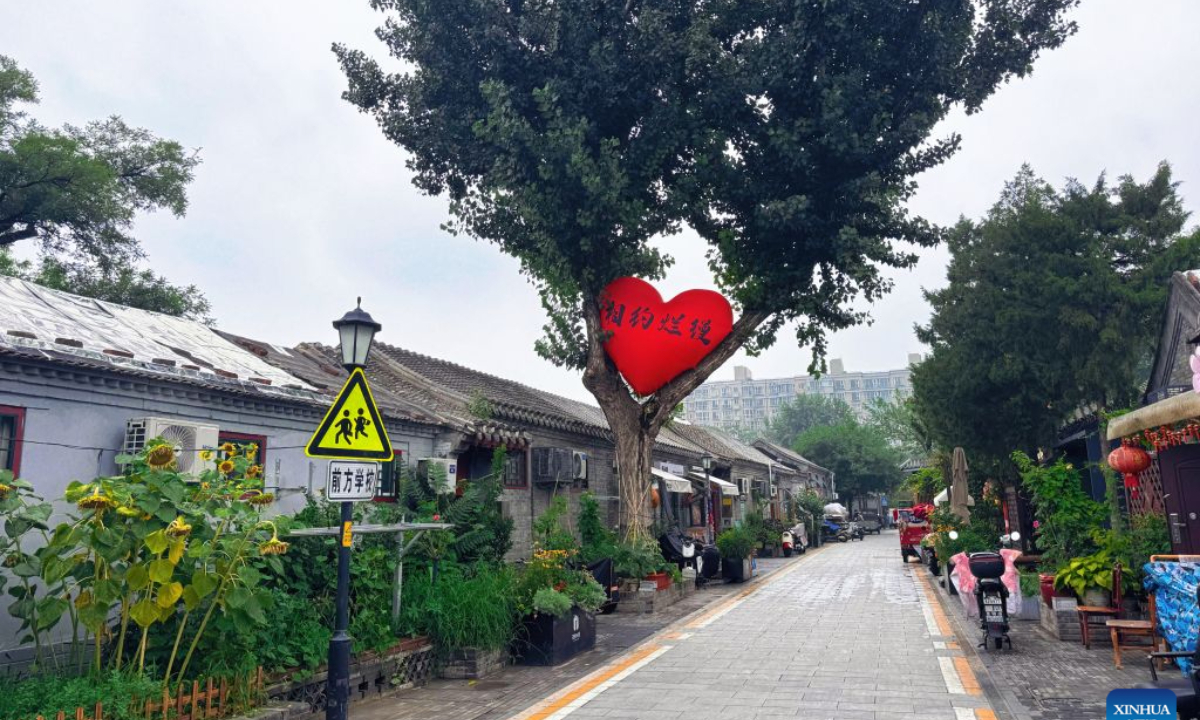
A city with over 3,000 years of recorded history, Beijing has constantly grappled with how to modernise without erasing its past. Lanman Hutong, tucked in the city's core, offers a compelling case study in urban renewal that honours neighbourhood memories while leaving room for the new.
OLD ALLEY, NEW LIFE
When Lanman Hutong launched a major renovation in 2018, Chen feared his hand-built pigeon loft, a fixture since 2013, might have to come down.
To his relief, the designers had other plans. "Pigeons are part of old Beijing's culture," they told him. "They should stay, and we'll upgrade the loft."
The birds were soon moved into a new wooden structure -- brighter, sturdier and better ventilated. "It wasn't just a new pigeon house," Chen said. "It told me that what we treasure can endure."
He was not alone in witnessing the change. Zheng Enqing, 78, who has lived in the neighbourhood for over three decades, recalled the alley's former chaos: cars crammed into every available space, pedestrians squeezing past.
Today, the rough pavement has given way to neatly laid grey bricks, and a nearby multi-story parking facility has freed the lane for foot traffic.
Yet for Zheng, the most telling improvements were those shaped by residents themselves.
When an outdoor air-conditioning unit began blasting hot air onto his prized grapevine, he raised it with the neighbourhood committee.
"They listened," Zheng said, noting that this responsiveness, for him, defined the entire renewal. The unit was moved to the rooftop and screened with a structure that blends with the historic surroundings.
"Our goal was to improve the environment while letting residents keep their way of life," said Chen Qinghong, planning manager at Beijing DeYuan Dade Real Estate Investment Co., Ltd., the project developer.
Chen added that over 100 consultation meetings were held with locals before and during construction, covering everything from parking to landscaping and public facilities.
"Urban renewal should not ask residents to adapt to redevelopment," said Song Jingyang, an official with the Beijing Municipal Commission of Urban Management. "Rather, redevelopment should adapt to the people."
A LIVING COMMUNITY
For planners, however, upgrading the physical fabric was only the first step.
In 2023, Lanman Hutong introduced a voluntary relocation program, letting residents decide whether to stay or leave. Vacant courtyards were then gradually opened to businesses and cultural ventures suited to the historic district's character.
By early 2026, 641 households in the Fayuan Temple Historic District, where Lanman Hutong sits, had opted for relocation, making room for 105 new businesses. Cafés, bookshops, restaurants and cultural studios have since taken root in centuries-old courtyards.
Zheng, who chose to stay, admitted that the newcomers have shifted his outlook. "At first, I thought cafés were only for young people. Now I believe we older residents should also embrace these changes," Zheng said.
He is also cheered by the growing number of young faces in the alley. "That's exactly the kind of change we want to see," he said.
Among them is 23-year-old Hu Feixiong, a graduate student at Beijing University of Civil Engineering and Architecture.
Earlier this year, Hu and his teammates moved into a youth entrepreneurship space in Lanman Hutong, where they began offering architectural cultural products, including layered refrigerator magnets inspired by Beijing's landmarks, directly to customers in a real neighbourhood.
"We only pay basic utility costs, yet we can meet customers, test our products and refine our ideas in a living community," Hu said. Rather than remaining on design sketches or screens, their creations now reach visitors face-to-face in one of Beijing's oldest quarters.
In this way, the city's architectural heritage endures not just through preservation but through the ingenuity of a new generation.
"It is the interaction among residents, businesses and the community that keeps a neighborhood alive," said Wang Mingjun, an official with the Xicheng District Urban Management Committee. "Urban renewal is not a one-off project. It is an ongoing process in which everyone has a role to play."
Official data show that since 2017, more than 5,200 backstreets and alleys in Beijing have undergone environmental upgrades, with resident satisfaction steadily rising.
That approach reflects a broader shift across China. In Jinfeng Town, southwest China's Chongqing Municipality, for instance, residents are pinning their hopes on ongoing renewal projects to raise living standards further.
Under the urban renewal plan for the 15th Five-Year Plan period (2026-2030), China aims by 2030 to build cities that deliver a high quality of life for all -- a vision that, in Lanman Hutong, is already taking shape.
。

二 |
Current article:http://h48plzi.bianneixuanbingqinyouxie.buzz/news/20260826_6881523.html
Published on:20:27:15
 微信正在把自己变成一个AI
 【高新教育】“铭记历史 珍爱和平”——西安高新区第二十幼儿园国家公祭日活动纪实
 前绿党议员被警方指控两项入店行窃罪,下月出庭
 东莞樟木头“中国作家第一村”落户官仓唤醒古村诗与远方
 安徽省委网信办:健全涉诈信息预警和快速处置机制
 哥伦布机员主帅:我们对梅西限制得不错 裁判应该用黄牌控制局面
 Good News! Jo Bo Ah Set to Welcome First Child
 从舞台走向商业:人形机器人真实落地困境 过万销售背后订单真相
 市场监管总局发布第二批招标投标领域系统整治典型案例
 【阳光•科普】知法守法 与法“童”行——沈北新区第三幼儿园
 限量29台的神秘车型 兰博基尼Fenomeno将于8月圆石滩车展发布
 杨振宁敲醒国人:教育最大的坑,是磨掉你的直觉